Showing posts with label ET2. Show all posts

Wednesday, December 6, 2017

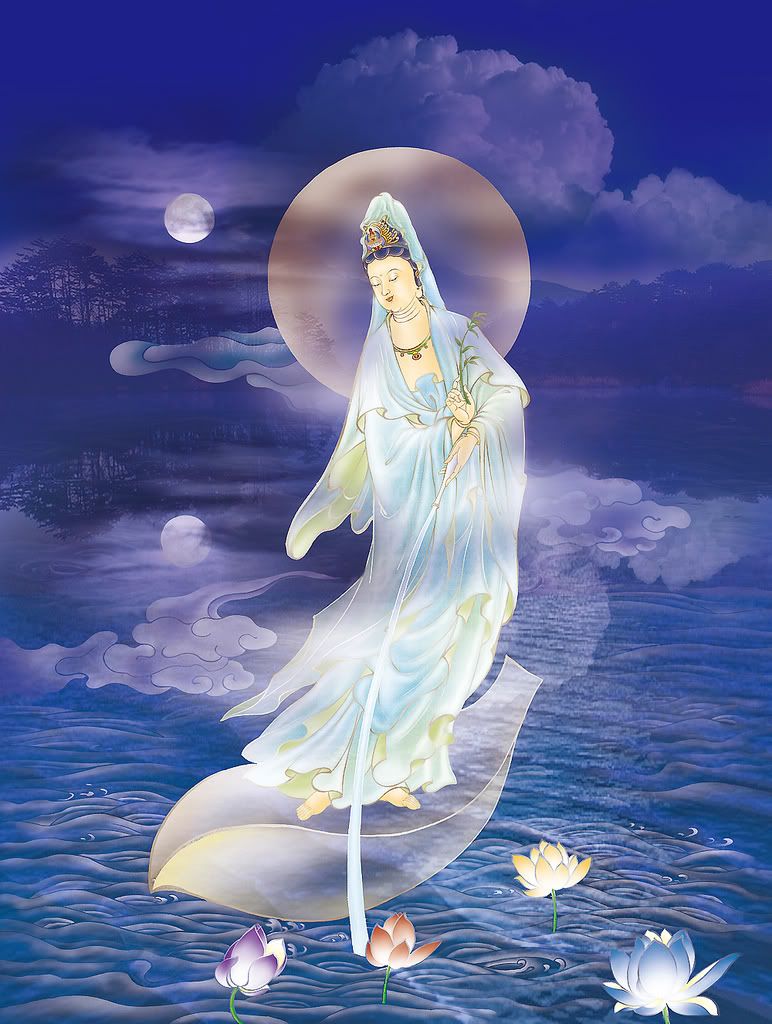
Guan-shi-Yin Bodhisattva


Guan-shi-Yin Pusa

Guan-Shi-Yin (another name of Avalokitesvara ) is the Bodhisattva of compassion and mercy. Guan-shi-Yin means "Observing the Sounds of the World."


Namo Guan-shi-Yin Pusa
Namo great compassionate Avalokitesvara Bodhisattva.

Wednesday, October 18, 2017

Ashoka the Great

Ashoka was the third ruler of the Maurya Dynasty and ruled almost the entire Indian subcontinent from c. 268 to 232 BCE. Let's have a look at his life history, empire, rule, administration and Dhamma.

Wednesday, October 11, 2017

The cause and effect

The cause and effect (Kamma )


-What is the cause of sufficient transportation ?

-Building bridges and roads for people in previous lives.

-What cause is possessing opulent clothes in this life ?

-Offering the robes to Buddhist monks and nuns in previous lives.

-What is the cause of prosperity in this life ?

-Generously giving alms to the poor in previous lives.

-What is the cause of being poor in the present life ?

-Being selfish and never give anything to help poor people in previous lives.

-What is the cause of having luxurious house in this life ?

-Offering food to the temples in previous lives.


-What is the cause of being happy and wealthy ?

-Building monasteries and supporting accommodation for people in previous lives.


-What is the cause of beautiful appearance in this life ?

-Offering flowers to the Buddha in previous lives.


-Diligently study Buddhist teachings, chant sutras and practice meditation in this life ?

-Getting wisdom and enlightenment in next life.


-What cause are others gratifying to see oneself from ?

-Creating good relationship to people in previous lives.


-What is the cause of having long lived parent ?

-Loving and respecting the lonely elders in previous lives.


-What is the cause of being an orphan ?

-Trapping birds in previous lives.


-What is the cause of being alone in this life ?

-Having adulterous affairs with others wives in previous lives.

-What is the cause of widowhood ?

-Disrespecting and looking down upon husband in previous lives.

-What is the cause of having good eye sight in this life ?

-Offering oil and lamp to the Buddha in previous lives.


Whatever we do, we will get the consequence,

Do not blame anyone when receiving retribution.

---

Who cultivates good seeds will get good fruit,

Who does evils will get bad consequence,

Don't say that the cause and effect is untrue,

We will pay karmic debts in near future, or our descendant will in distant future.


To understand your previous lives,

Look at retribution in your present life.

To have a preview of your next life,

Examine your daily acts in this life.

source: truyentranh8.net

Wednesday, October 4, 2017

Buddhism


Introduction

For more than 2,500 years, the religion we know today as Buddhism has been the primary inspiration behind many successful civilizations, the source of great cultural achievements and a lasting and meaningful guide to the very purpose of life for millions of people. Today, large numbers of men and women from diverse backgrounds throughout our world are following the Teachings of the Buddha. So who was the Buddha and what are His Teachings?


The Buddha

The man who was to become the Buddha was born Siddhattha Gotama around 2,600 years ago as a Prince of a small territory near what is now the Indian-Nepalese border. Though he was raised in splendid comfort, enjoying aristocratic status, no amount of material pleasure could satisify the enquiring and philosophic nature of the young man. At the age of 29 he left palace and family to search for a deeper meaning in the secluded forests and remote mountains of North-East India. He studied under the wisest religious teachers and philosophers of his time, learning all they had to offer, but he found it was not enough. He then struggled alone with the path of self- mortification, taking that practice to the extremes of asceticism, but still to no avail. 

Then, at the age of 35, on the full moon night of May, he sat beneath the branches of what is now known as the Bodhi Tree, in a secluded grove by the banks of the river Neranjara, and developed his mind in deep but luminous, tranquil meditation. Using the extraordinary clarity of such a mind with its sharp penetrative power generated by states of deep inner stillness, he turned his attention to investigate upon the hidden meanings of mind, universe and life. Thus he gained the supreme Enlightenment experience and from that time on he was known as the Buddha. His Enlightenment consisted of the most profound and all-embracing insight into the nature of mind and all phenomena. This Enlightenment was not a revelation from some divine being, but a discovery made by Himself and based on the deepest level of meditation and the clearest experience of the mind. It meant that He was no longer subject to craving, ill-will and delusion but was free from their shackles, having attained the complete ending of all forms of inner suffering and acquired unshakeable peace.


Kamma 

Kamma means 'action'. The Law of Kamma means that there are inescapable results of our actions. There are deeds of body, speech or mind that lead to others' harm, one's own harm, or to the harm of both. Such deeds are called bad (or 'unwholesome') kamma. They are usually motivated by greed, hatred or delusion. Because they bring painful results, they should not be done. 

There are also deeds of body, speech or mind that lead to others' well being, one's own well being, or to the well being of both. Such deeds are called good (or 'wholesome') kamma. They are usually motivated by generosity, compassion or wisdom. Because they bring happy results, they should be done as often as possible. 

Thus much of what one experiences is the result of one's own previous kamma. When misfortune occurs, instead of blaming someone else, one can look for any fault in one's own past conduct. If a fault is found, the experience of its consequences will make one more careful in the future. When happiness occurs, instead of taking it for granted, one can look to see if it is the result of good kamma. If so, the experience of its pleasant results will encourage more good kamma in the future. 

The Buddha pointed out that no being whatsoever, divine or otherwise, has any power to stop the consequences of good and bad kamma. The fact that one reaps just what one sows gives to the Buddhist a greater incentive to avoid all forms of bad kamma while doing as much good kamma as possible. 

Though one cannot escape the results of bad kamma, one can lessen their effect. A spoon of salt mixed in a glass of pure water makes the whole very salty, whereas the same spoon of salt mixed in a freshwater lake hardly changes the taste of the water. Similarly, the result of a bad kamma in a person habitually doing only a small amount of good kamma is painful indeed, whereas the result of the same bad kamma in a person habitually doing a great deal of good kamma is only mildly felt. 

This natural Law of Kamma becomes the force behind, and reason for, the practice of morality and compassion in our society.


( http://www.budsas.org)

Friday, September 1, 2017

Namo Amitabha Buddha -Vietnamese chanting

   (Vietnamese)                                       (English)

Nam-mo  A-Di-Da   Phat   <= >    Namo Amitabha Buddha


Saturday, November 7, 2015

the Buddhas' Sasana

Every evil never doing
and in wholesomeness increasing
and one's heart well-purifying:
this is the Buddhas' Teaching.

Lotus 

Think lightly not of evil,
"It will not come to me",
for by the falling of water drops
a water jar is filled.
The fool with evil fills himself,
he soaks up little by little.

Think lightly not of goodness,
"It will not come to me",
for by the falling of water drops
a water jar is filled.
The sage with goodness fills himself,
he soaks up little by little.

By oneself is evil done,
by oneself defiled,
by oneself it's left undone,
by self alone one purified.
Purity, impurity on oneself depend,
no one can purify another.

(Shakyamuni Buddha)

----------

enmity and amity

Avalokiteśvara  Bodhisattva


Bow the Buddha


Bow to The Buddha

I'm bowing the Buddha

Good Question, Good Answer

Good Question, Good Answer
Bhikkhu Shravasti Dhammika

What is Buddhism?

The name Buddhism comes from the word 'budhi' which means 'to wake up' and thus Buddhism is the philosophy of awakening. This philosophy has its origins in the experience of the man Siddhartha Gotama, known as the Buddha, who was himself awakened at the age of 35. Buddhism is now 2,500 years old and has about 300 million followers worldwide. Until a hundred years ago Buddhism was mainly an Asian philosophy but increasingly it is gaining adherents in Europe, Australia and America.

The Dhamma light

The Dhamma light

Lay Follower


"Venerable Sir, to what extent is one a lay follower?"

Following the Buddha's Footsteps


Following the Buddha's Footsteps
Instilling Goodness School
City of Ten Thousand Buddhas
Talmage, CA 95481 

INTRODUCTION TO BUDDHISM
 
As a child, Siddhartha the Buddha, was troubled by some of the same thoughts that children today have. They wonder about birth and death. They wonder why they get sick and why grandfather died. They wonder why their wishes do not come true. Children also wonder about happiness and the beauty in nature.

EIGHT WORLDLY CONDITIONS

EIGHT WORLDLY CONDITIONS

Vicissitudes of Life (Atthalokadhamma)

FOR THE AGED AND THE SICK

FOR THE AGED AND THE SICK By Ven. Thich Thanh Tu 

THE TRIPLE JEWEL

The Buddha knew it would be difficult for people to follow his teachings on their own, so he established the Three Refuges for them to rely on. If a person wants to become Buddhists take refuge in and rely on the Buddha, the Dharma, and the Sangha. These are known as the Triple Jewel. The Sangha are the monks and nuns. They live in monasteries and carry on the Buddha's teaching. The word Sangha means 'harmonious community'. The Buddha, the Dharma, and the Sangha together possess qualities that are precious like jewels and can lead one to enlightenment.

The Four Noble Truths

The Four Noble Truths


1. Life means suffering.

2. The origin of suffering is attachment.

3. The cessation of suffering is attainable.

4. The path to the cessation of suffering.

The Noble Eightfold Path

The Noble Eightfold Path

The Way to end all suffering is called the Middle Way because it avoids the two extremes of sensual indulgence and self-mortification. Only when the body is in reasonable comfort but not over-indulged has the mind the clarity and strength to meditate deeply and discover the Truth. This Middle Way consists of the diligent cultivation of Virtue, Meditation and Wisdom, which is explained in more detail as the Noble Eightfold Path.

1. Right View
2. Right Intention 
3. Right Speech 
4. Right Action 
5. Right Livelihood 
6. Right Effort 
7. Right Mindfulness 
8. Right Concentration

Six Perfections

Avalokiteśvara Bodhisattva

To Become a Buddha
A Bodhisattva Has to Practise Six Perfections:

the perfection of giving - dana paramita
the perfection of morality - shila-paramita
the perfection of patience - kshanti-paramita
the perfection of energy - virya-paramita
the perfection of meditation - dhyana-paramita
the perfection of wisdom - prajna-paramira

10 Vows of Samantabhadra Bodhisattva

10 Vows of Samantabhadra Bodhisattva

Samantabhdra is a popular Mahayana Buddhist Bodhisattva. He is also known as the Bodhisattva of Great Activity. A Bodhisattva is a "Buddha-to-be," and helps sentient beings along the path to enlightenment.

Samantabhadra listed ten great vows or practices to follow. These practices create merit and virtue helping one to become closer to enlightenment. These ten practices are:

Buddhist Music

Namo Avalokitesvara Bodhisattva


BASICS OF BUDDHISM